Translate

Wednesday, May 29, 2019

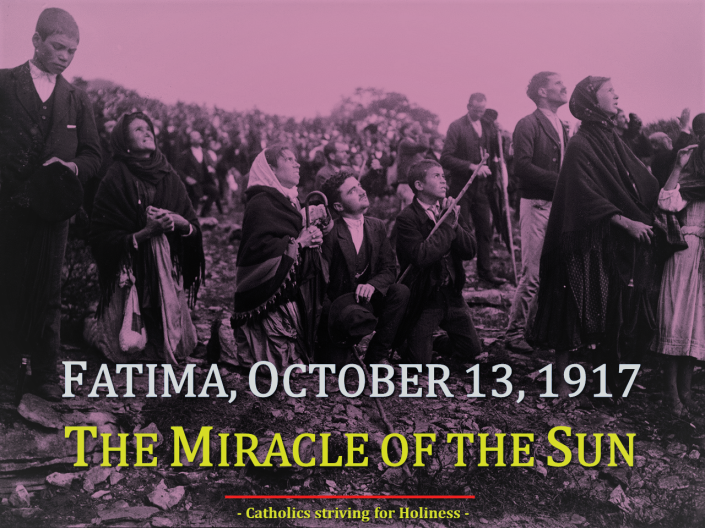
Eyewitness professor’s account of Fatima’s Miracle of the Sun


“Then, suddenly, one heard a clamor, a cry of anguish breaking from all the people.

The sun, whirling wildly, seemed all at once to loosen itself from the firmament and,

blood red, advance threateningly upon the earth as if to crush us with its huge

and fiery weight. The sensation during those moments was truly terrible”.
 

Dr. José Maria de Almeida Garrett


The Miracle of the Sun


An Eyewitness Account by Dr. José Maria de Almeida Garrett, professor at the Faculty of Sciences of Coimbra, Portugal


"It must have been 1:30 p.m when there arose, at the exact spot where the children were, a column of smoke, thin, fine and bluish, which extended up to perhaps two meters above their heads, and evaporated at that height. This phenomenon, perfectly visible to the naked eye, lasted for a few seconds.

Not having noted how long it had lasted, I cannot say whether it was more or less than a minute. The smoke dissipated abruptly, and after some time, it came back to occur a second time, then a third time.


"The sky, which had been overcast all day, suddenly cleared; the rain stopped and it looked as if the sun were about to fill with light the countryside that the wintery morning had made so gloomy. I was looking at the spot of the apparitions in a serene, if cold, expectation of something happening and with diminishing curiosity because a long time had passed without anything to excite my attention. The sun, a few moments before, had broken through the thick layer of clouds which hid it and now shone clearly and intensely.


"Suddenly I heard the uproar of thousands of voices, and I saw the whole multitude spread out in that vast space at my feet...turn their backs to that spot where, until then, all their expectations had been focused, and look at the sun on the other side. I turned around, too, toward the point commanding their gaze and I could see the sun, like a very clear disc, with its sharp edge, which gleamed without hurting the sight. It could not be confused with the sun seen through a fog (there was no fog at that moment), for it was neither veiled nor dim. At Fatima, it kept its light and heat, and stood out clearly in the sky, with a sharp edge, like a large gaming table. The most astonishing thing was to be able to stare at the solar disc for a long time, brilliant with light and heat, without hurting the eyes or damaging the retina. [During this time], the sun's disc did not remain immobile, it had a giddy motion, [but] not like the twinkling of a star in all its brilliance for it spun round upon itself in a mad whirl.


"During the solar phenomenon, which I have just described, there were also changes of color in the atmosphere. Looking at the sun, I noticed that everything was becoming darkened. I looked first at the nearest objects and then extended my glance further afield as far as the horizon. I saw everything had assumed an amethyst color. Objects around me, the sky and the atmosphere, were of the same color. Everything both near and far had changed, taking on the color of old yellow damask. People looked as if they were suffering from jaundice and I recall a sensation of amusement at seeing them look so ugly and unattractive. My own hand was the same color.


"Then, suddenly, one heard a clamor, a cry of anguish breaking from all the people. The sun, whirling wildly, seemed all at once to loosen itself from the firmament and, blood red, advance threateningly upon the earth as if to crush us with its huge and fiery weight. The sensation during those moments was truly terrible.


"All the phenomena which I have described were observed by me in a calm and serene state of mind without any emotional disturbance. It is for others to interpret and explain them. Finally, I must declare that never, before or after October 13 [1917], have I observed similar atmospheric or solar phenomena." ….


Professor Almeida Garrett's full account may be found in Novos Documentos de Fatima (Loyala editions, San Paulo, 1984)


Tuesday, May 28, 2019

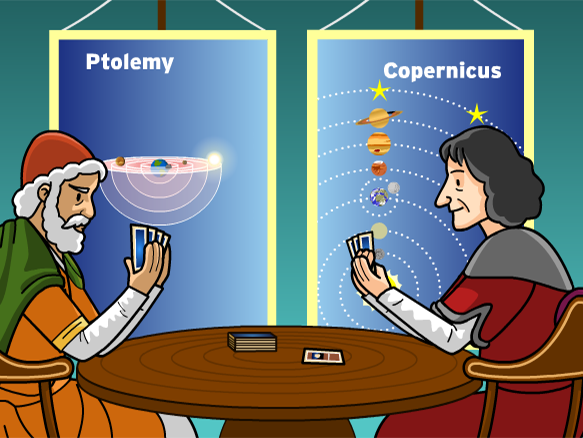
A tilt at Copernicanism


“After all, even Copernicus' own system was by his own admission (read his original,
i.e. the first edition of De revolutionibus orbium coelestium) nothing more than a synoptic rehash of the already-existing diverse (part geocentric, part heliocentric, fire centric,
animal centric...) ideas of men like Hicetas, Ecphantus, Heraclides and Aristarchus”.


The "Rotating" Earth..
Theory, Fact or Fiction?
 
Oh what a tangled web we weave, when first we practice to deceive! --Sir Walter Scott
Throughout ancient times it was obvious that the moon went around the earth. This is still accepted today. But in the past it was just as obvious that the sun went around the earth as well. This was not because men in those days lacked fantasy and forgot to imagine non-existent movements of themselves and their surroundings. It is because they did their homework and examined all the evidence before them, that they came to the understanding that the earth was a firm, motionless sphere, neither in rotation around itself nor wandering through space around another body.
This geostatic and geocentric nature of the earth was repeatedly tested and verified as being factual for a quite some time (going back thousands of years) by knowledgeable, civilized, free people of all stripes, i.e. those who were supposed to know, like astronomers, natural philosophers (a.k.a. scientists), explorers, teachers, traders, seamen, navigators and various other free and educated men (as opposed to schooled, wage enslaved, homogenized, "experts" of modern times who wouldn't dare bite the hand that feeds them).
 
Then, all of a sudden, just 400 plus years ago, a band of court astrologers started pushing this idea that the earth was orbiting the sun this time, and that the sun was standing still at the center (hence the claim of the system being a 'solar' system). Nevertheless this new claim was not accompanied by any new proof. It was simply invoked and declarations were made that the fixed nature of earth needed to be disapproved.
 
Then, various kinds of earth movements were claimed to have existence and, subsequently abstract calculations were made of the speed and other attributes of these imaginary movements - presenting the results as if they have measured an actual motion. The major and in fact the only reason that was brought up for advancing this whole idea was that the then mainstream Ptolemaic model of the universe was deemed inconvenient in explaining and predicting the movements of the planets as they appear in the sky (especially one particular kind of movement: the retrograde motion of the planets in the sky).
 
But all along it was (and still is) a fact that a stationary earth, situated at the center of the universe also accounts for those retrograde motions, as shown by astronomer Tycho Brahe for example. And, although Ptolemy's epicyclical system was the long established one, it did not have exclusive monopoly. There were many ideas and models in circulation - like those of Pythagoras, Philolaus, Jean Buridan, Martianus Capella, Nicholas of Cusa and René Descartes to name a few.
 
After all, even Copernicus' own system was by his own admission (read his original, i.e. the first edition of De revolutionibus orbium coelestium) nothing more than a synoptic rehash of the already-existing diverse (part geocentric, part heliocentric, fire centric, animal centric...) ideas of men like Hicetas, Ecphantus, Heraclides and Aristarchus. So then, all those years - and right up to now - nobody has ever succeeded in showing or even detecting any movement of the earth in space.
 
However this complete lack of scientific evidence is not admitted. Instead a smokescreen of hearsays, popular opinions, organizational rulings, majority votes, superficial analogies, "expert" testimonies, personal convictions and such other means of persuasion (none of which qualify as scientific proof) are proposed and presented in order to support the heliocentric theory.
 
Heliocentricity is not a logically plausible (let alone irrefutable) theory that is based on scientific data but is actually, purely based on a series of assumptions that were built-up over the last 200 years. For example many (but not all) of the assertions regarding astronomical distances between celestial bodies are based on the necessary assumption that the earth must be revolving around the sun.
 
But at the same time, these assumed distances have another function whereby they are deployed as some sort of supportive argument for the "trueness" of the heliocentric hypothesis.
For example we are told that sun is too big to revolve around the earth, despite the fact that the sun's size was determined in the first place by assuming how big it must have to be in order to allow a heliocentric premise! Go figure. Other needed assumptions include:
 
■ the bendover earth (alleged 'tilt' of the earth's axis - a desperately needed heliocentric variable that has no basis in the physical world where the sun simply spirals from the Tropic of Cancer to the Tropic of Capricorn annually. Both of these tropic latitude lines are not tilted - they are at a 0° angle (= parallel) to the equator. The word "tropic" itself comes from the Greek term tropos, meaning turn, referring to the fact that the sun "turns back" at these lines that aren't tilted in any way,
■ the earth supposedly jittering around the sun at various speed levels (it orbits at a faster speed at one time, and then it goes relatively slower at another - then back faster again) but somehow, all this alleged speed-change remains unnoticeable),
■ the moon also being dragged along exactly at those same speed levels (100% complete synchronization with the wobbly earth despite being hundreds of thousands of miles away from it(!) Now how about that?,
■ even atmospheric gas (the air) being attached to the earth's surface (again completely synchronized but somehow (simultaneously) free-flowing enough to blow in every direction). These are just samples of the never shown, never detected, never scientifically observed absurdities that are required to save the appearances of the heliocentric model.
 
Facts are facts
 
Heliocentrists have been known to point to certain geophysical and astronomical features as arguments which they claim supports their sun-centered view. For example they claim that the Cape Canaveral area in Florida is chosen as a site for NASA's rocket launch center because it is one of the more southern points on the U.S. mainland and therefore closest to the equator. The same argument comes up regarding the reason why Europe's rocket launch center is located in French Guyana (in South America). There is supposed to be an advantage to being close to the equator when the goal is to get a vehicle into orbit: the "rotating" earth supposedly creates a centrifugal force that supposedly "lifts" the missiles. Well, the truth is that there is no real advantage: China's Jiuquan space center is found all the way up in the far north of the country (Inner Mongolia province). Why did the Chinese choose this site, when they have vast territory much further south which is closer to the equator? In fact, portions of southern China are closer to the equator than to the northern cosmodrome, from where they toss their taikonauts into orbit. The Russians are also reported to be developing a new space launch facility, which will be located much north of the current Baikonur Cosmodrome in Kazakhstan. This all means that a rocket launched tangentially from the Earth's equator doesn't really provide a more advantageous escape-velocity!
 
Getting closer to the supposed existence of an "equatorial centrifugal force" on the surface of the "rotating" earth (and other bogus heliocentric claims) is like getting closer and closer to an apparent pool of water in the desert: it dissolves and disappears right before your eyes in a spectacular fashion! Another bogus argument that some solar system advocates bring up from time to time is inertia and momentum. What is it that the moving-earth theorists believe is the substance (or the vector field) that supposedly exerts a huge gravitational force on air molecules which prevents the atmosphere around the earth from trailing behind the allegedly speeding earth (as is the case for comets)? Their answer?: Nothing. Instead, heliocentrists usually propose a fraudulent analogy of how the earth's motion is comparable with some person walking inside a moving train.
They claim that since the walker inside the train feels more or less the same as he or she feels when walking on the ground that somehow is supposed to reassure us that the earth could also be moving without we feeling it.
 
The problem with this analogy is of course the fact that once the person inside the train opens a window and faces the elements, he or she will feel it soon enough what the real speed is that the train is traveling at! Therefore the only correct analogy for someone walking on the ground of earth is someone walking in an open train or better yet - on the roof of a moving train. What will [happen] … then?
 
Well, the person will instantly encounter a force that is proportional and in opposite direction to the moving train. But why? Isn't the surrounding air supposed to be following the train, just as we are told the atmosphere is allegedly doing so by keeping-up with the supposedly faster-than-bullet rotating earth? Looks like heliocentrists have decided to suspend the laws of physics (aerodynamics) just for this case of a badly needed moving earth theory!
 
But still somehow, this law of motion is supposed to apply in all other cases of moving things in the universe?! This contradiction is quietly adopted in order to hide the fact that there is a force that is causing an air drag or friction that wasn't there before the train arrived. The friction with the earth's surface wasn't there because, unlike the train, the earth didn't move!
 
Getting to the top (and bottom) of it
 
The star whose location is closest to the point vertically above north pole (= celestial pole) is Polaris, a.k.a. the North Star, around which all the other stars appear to rotate (as visible during the night). Now, why is it that only one single star is a pole star throughout the whole year? All kinds of other stars should have taken turn to become pole stars if the earth was slinging around the sun. But since that is not the case and Polaris remains the most northerly of the stars all year round, as seen on photographs of star-trails (see below), it can only mean that the earth is not orbiting the sun. Moreover, a moving and orbiting earth would have caused the paths of stars to appear as (spiral) lines instead of fully circular tracks that we observe night after night, and consequently the shapes of the constellations would have changed considerably over the course of a single year. So what we're looking at is what is real - WYSIWYG: stars orbiting the Earth once a sidereal day, i.e. the time it takes for a celestial object to rotate 360°. For the stars around the Earth this is: 23 hours, 56 minutes and 4.091 seconds.
 
Truth has a way of being indestructible. It may or may not be popular at any given time, it may even be barely noticeable, but it is always there. And it turns out that the truth actually gets in the way of "science"! Modern theoretical (non-applied a.k.a 'pure') physics is not really science-driven but agenda-driven. It is populated with heavily politicized academia. It has become nothing much more than a sham propaganda-exercise of empty eloquence with false authority. The inventor of the electric world we live in, Nikola Tesla was spot-on when he remarked that modern non-applied science has become nothing more than manipulative indulgence in fancy "thought experiments" and abstract, fuzzy math which have no relation to reality. Instead of the theories being made to fit reality, what we have is the opposite: reality being adjusted or in fact completely overthrown, in order to fit agenda-driven theories and models. ….
Saturday, May 25, 2019

Pope Francis says abortion is like 'hiring a hitman' amid heartbeat law protests splitting US


Pope Francis says abortion is like 'hiring a hitman' amid heartbeat law protests splitting US
Bulgarian Catholic children receive their First Communion given by Pope Francis during the Holy Mass at Most Holy Heart of Jesus church in Rakovski, Bulgaria May 6, 2019. © REUTERS/Yara Nardi
 
The pontiff, who is known for his outspoken aversion to the practice, tore into the proponents of abortion as an inalienable human right. Speaking at an anti-abortion conference in Vatican on Saturday, he argued that there is no excuse for taking away a human's life – even in cases when the fetus has a debilitating medical condition and the newborn might die at birth or shortly after.
 
Also on rt.com Redacted Tonight takes on corporations claiming to support women & funding abortion ban enthusiasts

"Is it licit to throw away a life to resolve a problem? Is it licit to hire a hitman to resolve a problem?"

Francis asked, stressing that a sick fetus should be provided with all possible care, as should the parents, who need to be prepared to cope with their loss.
"Taking care of these children helps parents to grieve and not only think of it as a loss, but as a step on a path taken together."
Francis, as the head of the Roman Catholic Church, has not shunned away from controversial comparisons before. Last October, he spoke along the same lines, equating abortion with "resorting to a contract killer to solve a problem." Before that, he compared the practice with a version of the Nazi eugenics program.
While the Vatican's rhetoric might sound extreme to pro-choice activists who fight against blanket bans on abortions, Francis has reaffirmed the Catholic Church's centuries-old opposition to the practice, which it considers a mortal sin.

READ MORE: ‘Strongly pro-life’ but supports exceptions: Trump weighs in on raging abortion law battle

The strong-worded remark from Francis comes at a time the issue is grabbing the headlines in US media after half a dozen states passed restrictive anti-abortion bills or are prepare to do so
The strictest abortion bill in the nation was signed into law by Alabama governor Kay Ivey last week. It makes the procedure a class-A felony, outlawing all abortions, including in the case of incest and rape, but makes an exception if the mother's life is at stake. Doctors who violate the ban face 10 to 99 years in prison. The bill sparked an outcry and mass protests led by pro-choice activists, and the American Civil Liberties Union (ACLU) and Planned Parenthood on Friday filed a lawsuit to challenge it.
Earlier this month Ohio, Georgia and Mississippi passed "fetal heartbeat" laws, which prohibit abortions after six weeks of pregnancy, around the time when a fetus' heartbeat can be detected. Only the Georgia law included exemptions for rape and incest. The bills, while applauded by pro-life activists, have spawned numerous legal challenges and are likely to be contested. On Friday, a federal judge in Mississippi blocked the respective anti-abortion law, granting preliminary injunction after hearing the argument from the Center for Reproductive Rights.
Missouri has become the latest state to pass a bill outlawing abortions after eight weeks and envisioning 15-year prison terms for doctors who perform them.
Louisiana lawmakers are scheduled to vote on the state's own heartbeat abortion ban on Tuesday.

https://www.rt.com/news/460282-pope-abortion-hiring-hitman/


Monday, May 20, 2019

GOP governor says abortion ban shows Alabama values 'sanctity of life'


Gov. Kay Ivey, after signing the most stringent abortion law in the nation, said she doesn't expect any backlash from businesses or tourism.


By Associated Press


MONTGOMERY, Ala. — Alabama's governor said Monday the new abortion ban she recently signed into law reflects the high value residents place on the "sanctity of life," adding she doesn't expect any fallout from the controversial measure on tourism or business recruitment.

Gov. Kay Ivey last week approved the most stringent abortion law in the nation — making performing an abortion a felony in nearly all cases unless necessary for the mother's health. The law provides no exception for rape and incest. Asked about criticism the state has received— particularly over the lack of an exception for rape and industry — the Republican governor noted the bill was overwhelmingly approved by the Alabama Legislature without the exceptions.
"The Legislature has spoken," she said. "It underscores the sanctity of life the people of Alabama value so highly."
The Republican governor was asked about the ban after a news conference Monday about the state tourism industry. The bill's passage drew calls on social media by some opponents to boycott the state in protest.
Ivey brushed off any suggestions protesters could do any possible harm to tourism and efforts to woo new industry and business to Alabama.


"Alabama has a lot of different variety of things to visit and enjoy and our visitors will continue to come," Ivey said.
The law does not take effect for six months and legal challenges are widely expected to block it in the courts.
On Sunday, hundreds of marchers took to the streets in Montgomery, Birmingham and Huntsville to protest the abortion ban that Ivey signed into law. Crowds chanted "my body, my choice!" and "vote them out!"


https://www.nbcnews.com/politics/politics-news/gop-governor-says-abortion-ban-shows-alabama-values-sanctity-life-n1007816

Sunday, May 19, 2019

Pope at Regina Coeli: 'God's love opens horizons of hope’

Image result for love of god
 

Pope Francis on Sunday reflected on God’s love for his people that transforms the hardest of hearts and gives us the strength to overcome prejudice, build bridges and undertake new paths giving life to the dynamism of fraternity.

 
By Linda Bordoni


During the Regina Coeli prayer in St. Peter’s Square, Pope Francis reflected on the Gospel of the day that speaks of God’s love for us and of his order to love each other as we love ourselves.
“Today's Gospel”, the Pope said, “takes us into the Upper Room to hear some of the words that Jesus addressed to his disciples in his ‘farewell address’ before his passion”.
He recalled how after washing the feet of the twelve apostles, He says to them: “I give you a new commandment: love one another. As I have loved you, so you also should love one another”.

In what sense is this commandment new?

But in what sense is this commandment ‘new’? The Pope asked, pointing out that already in the Old Testament God had ordered his people to love their neighbours as themselves, and that Jesus had already described as the greatest commandment of the Law to love God with all one's heart, and the second to love one's neighbour as oneself.

The novelty, he said, is in the love of Jesus Christ, He who gave His life for us.
It’s all about God's universal love, the Pope continued, a love without conditions and without limits, “which comes to its apex on the cross”.
“In that moment of extreme abandonment to the Father, the Son of God showed and gave the world the fullness of love”, he said.
So, he continued, “thinking back to Christ's passion and agony, the disciples understood the meaning of his words: ‘As I have loved you, so you also should love one another’.”

God’s love for us knows no limits

Jesus, the Pope said, loved us despite our frailties, our limitations and our human weaknesses. It was He who made us worthy of His love, which knows no limits and never ends.
By giving us the new commandment, the Pope added, He asks us to love one another not only with our love, but with his love, the love the Holy Spirit infuses into our hearts if we invoke him with faith.
Only in this way, he explained, can we love one another not only as we love ourselves, but as He loved us: that is, immensely more.
“God loves us much more than we love ourselves”, he said.
Only in this way, Pope Francis said, can we “spread the seed of love that renews relationships between people and opens horizons of hope”.

A love that enables us to forge a fraternal society

“This love makes us new men and women, brothers and sisters in the Lord, it makes us the new People of God, the Church, in which everyone is called to love Christ and in Him to love one another”, he said.
The love manifested in the Cross, the Pope said, “is the only force that transforms our hearts of stone into hearts of flesh; that makes us capable of loving our enemies and forgiving those who have offended us; that makes us see the other as a present or future member of the community of Jesus' friends; that stimulates us to dialogue and helps us to listen to one another and know one another”.
“Love opens us up to others, becoming the foundation of human relationships”, he concluded, “It enables us to overcome the barriers of our own weaknesses and prejudices, it creates bridges, it teaches new ways, it triggers the dynamism of fraternity”.


https://www.vaticannews.va/en/pope/news/2019-05/pope-regina-coeli-gospel-st-peters-square.html


Thursday, April 4, 2019

Did Senenmut omit planet Mars from his astronomical ceiling?


senmut
Did Senenmut omit planet Mars from his astronomical ceiling?


by
 
Damien F. Mackey


It is quite useless, I believe, for archaeoastronomers to attempt retro-calculations to a particular night sky when neither BC, nor AD, times have been properly established. Even more so in the case of Senenmut and Hatshepsut, who have been hopelessly mis-dated in the conventional chronology.


Senenmut (Senmut), Pharaoh Hatshepsut’s high official of the Eighteenth Egyptian dynasty, I have identified as King Solomon himself in his important contact with Egypt:
 
Solomon and Sheba
 
 
focussing there upon the more worldly attributes of this celebrated King of Israel.
 

The famous astronomical ceiling of Senenmut is testimony to the wisdom and culture of the man. King Solomon himself claimed to have had unerring astronomical, and other, knowledge (Wisdom 7:17-20):
 
For it was he who gave me unerring knowledge of existent being,
to know the structure of the universe and the operation of the elements;
the beginning, and end, and middle of times,
the changes of the solstices and the vicissitudes of the seasons;
the cycles of years and the positions of the stars;
the natures of living creatures and the tempers of beasts;
the violent force of spirits and the reasonings of men;
the species of plants, and the virtues of roots.
 
Abraham O. Shemesh, in “‘And God gave Solomon wisdom’: Proficiency in ornithomancy”, has summed up the wisdom and knowledge of King Solomon as follows:
 
The Wisdom of Solomon: The biblical text
 
According to the biblical narrator, Solomon was more knowledgeable than reputable wise men of the ancient world, and he was widely renowned for his wisdom. As a result, people sought his presence and came from afar to witness this prowess; for example, the Queen of Sheba (1 Ki 10:1-24). Solomon's wisdom is described in detail and it encompassed varied domains:
 
And God gave Solomon wisdom and understanding beyond measure, and largeness of mind like the sand on the seashore, so that Solomon's wisdom surpassed the wisdom of all the people of the east, and all the wisdom of Egypt. For he was wiser than all other men, wiser than Ethan the Ez'rahite, and Heman, Calcol, and Darda, the sons of Maol; and his fame was in all the nations round about. He also uttered three thousand proverbs; and his songs were a thousand and five. He spoke of trees, from the cedar that is in Lebanon to the hyssop that grows out of the wall; he spoke also of beasts, and of birds, and of reptiles, and of fish. (1 Ki 4: 29-33)1
 
Solomon's great wisdom is evident from the biblical verses, as reflected on three dimensions:
 
1. The relative dimension - his extensive knowledge in comparison to other wise men in the Ancient Near East. Benjamin Mazar contends that when comparing Solomon with other wise men it is evident that worldly knowledge was prevalent in Israel and particularly among the royal house in Jerusalem. Indeed, Mesopotamian literary works enjoyed an extensive distribution and were found in various sites, for example in Megiddo and Ugarit as well as in the al-Amarna archives (Mazar 1980:133).
2. The quantitative dimension - Solomon's impressive knowledge in the literary sphere included a tremendous wealth of parables and poetry.
3. The comprehensive dimension - Solomon's knowledge was extremely comprehensive. Use of the prepositions min [from] and ve'ad [to] for this purpose indicates an endless scope of knowledge that cannot be quantified, similar to literary knowledge (Ha-Reuveni 1985:275-288). Solomon ruled over all extant creatures. He was familiar with all species of flora - from the most highly developed, Cedrus libani, to the most inferior, Majorana syriaca (Feliks 1992:138). He also ruled over the various animal species, with their different characteristics.
[End of quote]
Then why did the great man, Senenmut - even more so if he were King Solomon - fail to include the planet Mars in his astronomical ceiling, if that is what he did?
 
And the general consensus appears to be that that is what he did.
 
J. Belmonte and M. Shaltout, who accept that Mars is not represented there, believe there to be a very ‘prosaic and simple’ reason for the planet’s omission from Senenmut’s star map ceiling (“The Astronomical Ceiling of Senenmut: a Dream of Mystery and Imagination”):
 
Abstract
 
The most ancient complete representation of the Egyptian (and of any other people) sky is to be found in the ceiling of the first chamber at the tomb of Senenmut at Deir el Bahari (Tomb 353 of the Theban western necropolis). Since the discovery of the tomb, the astronomical ceiling was compared with other representations of the same celestial diagram found in other monuments, such as the nearby Ramesseum or the tomb of Sethy [Seti] I. One important point was stressed, the absence of the planet Mars in Senenmut´s representation. Consequently, some scholars have tried to show that the diagram represents a real celestial map and have tried to demonstrate that the ceiling was designed in such or such epoch, when Mars was not visible, or visible in peculiar position, in an attempt to date Senenmut´s carrier and, consequently, a very important period of Egyptian history, the reign of queen Hatshepsut. In this paper, we try to show that all these hypotheses are based on erroneous foundations and that the absence of Mars can be explained in a much more prosaic and simpler manner. Other problematic aspects of the astronomical ceiling will be also briefly discussed.
….
 
For example, on the one side, for Leitz (1991), it shows the night sky for different nights in the year 1463 BC and specially that of November 14th (all dates, unless expressed, are in the Julian Calendar) when Mars was not visible … and, on the other side, for von Spaeth, the night of May 22nd 1534 BC, identifying Mars with another star within the diagram ….
 
Mackey’s comment: It is quite useless, I believe, for archaeoastronomers to attempt retro-calculations to a particular night sky when neither BC, nor AD, times have been properly established. Even more so in the case of Senenmut and Hatshepsut, who have been hopelessly mis-dated in the conventional chronology.
J. Belmonte and M. Shaltout now provide their own explanation for what has happened:
….
The hypothesis we would like to defend in the present paper is that the astronomical ceiling of the tomb of Senenmut is a gigantic copy of a papyrus draft of a celestial diagram that would have existed and used to be represented in clepsydrae (as that of Karnak). Because of the lack of space, when moving the design from a conical to a flat surface, part of the decoration was lost. This could have been the case for the image of the King (in this case it should have been Hatshepsut) offering to Re-Horakhty. As a matter of fact, only two outer planets would have remained in the final representation.
 
Hence, the explanation for the absence of Mars would be very prosaic, merely iconographical and not related at all with astronomy.
Indeed, we would like to mention that the hypothesis that an astronomical ceiling might represent an extended design of a clepsydra was already defended by Spalinger (1995), but in reference to the astronomical ceiling of the Ramesseum, where the three outer planets are represented. Thus, that particular ceiling should correspond to a later and improved design of water-clock decoration.
 
The “clepsydra” like astronomical ceiling of Senenmut would include some other  peculiarities. The outer planets were also named also after the Horus title of Queen Hatshepsut, which as a matter does not include the epithet “strong bull” … presumably because she was a woman. As a consequence, her twin-planet could not be “Horus, the Bull of Heaven”, and was transformed to the “Mother of the Bull of Heaven” (no blame for the scribe, who did an excellent work). ….


Christopher Dawson on laws of mathematics


Gavin Ardley’s Marvellous Perception of the Nature of the Modern Sciences
 
Part One (b): Christopher Dawson sums it up


by
 
Damien F. Mackey


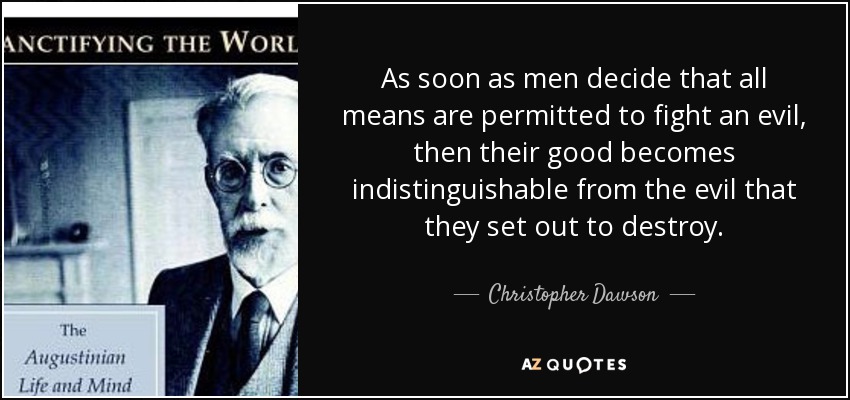
“If the laws of mathematics are simply the creation of the human mind,
they are no infallible guide to the ultimate nature of things. They are a conventional technique which is no more based on the eternal laws of the universe than is
the number of degrees in a circle or the number of yards in a mile”.
 
Christopher Dawson


The insightful words of Christopher Dawson (d. 1970) here seem to me closely to echo the sentiments of Dr. Gavin Ardley, in his masterpiece, Aquinas and Kant. The Foundations of the Modern Sciences (1950), who wrote in his Chapter III (“The Nature of Modern Physics”):
 
The Classical, or Realist, Theory of Modern Physics
 
The classical writers on scientific method, men like John Stuart Mill, and the English empiricists generally, took it for granted that modern physics was, like ancient physics, endeavouring to discover the nature and functioning of the physical world about us. Only, they believed, it was doing it much more successfully than was the ancient and medieval physics. They saw the change that came over physics in the days of Galileo as a change occasioned by increased attention to observation and experiment. They accused the Aristotelians of paying too little attention to observation and too much to a priori notions. Liberation from the medieval straight-jacket, and careful experiment and measurement, coupled with the powerful instrument of mathematics, was believed to be the reason for the great strides forward in physical science from Galileo onward.
Physics was thus regarded as a truly empirical science. The physicist was supposed to observe uniformities in Nature and to generalise these into laws. Some varied this a little by pointing out that physicists take hypotheses and then put them to the test of experiment. If experiment verifies the hypothesis then we have discovered a valid law or theory of physics. By these means, it was believed, were discovered such laws and principles as Newton’s Laws of Motion and the Law of Universal Gravitation, the Conservation of Energy, the Wave Theory of Light, the Atomic Theory of Matter, and so on.
Physics was thus held by these philosophers and logicians to be slowly wresting out the secrets of Nature, to be steadily unfolding before us the constitution of the physical world. The uniformity of Nature is revealed in the true laws of physics, and renders them immutable.
Physics is subject at every turn to the test of experiment, and anyone can upset a theory simply by showing that some observation is contrary to it. Thus physics abhors authority and anything that smacks of the a priori. Consequently the modern physicist reviles the old Aristotelian physicist who, he believes, was bound hand an foot by authority and a priori notions.
By this slow empirical advance, it was believed, there was built up this great edifice of modern physics; an edifice which today occupies one of the most prominent positions in our intellectual horizon, while in practical applications it has transformed daily life by surrounding us with a countless multiplicity of instruments and amenities.
Although the classical empiricist logicians were not all agreed on what was, precisely, the scientific method, yet on the general picture they were unanimous. [Footnote: See further Ch. XI, on Scientific Method.]
 
The Eddingtonian Theory
 
Nevertheless there has long been a minority which has held other views about the nature of physics and scientific method. In recent years these views have pushed their way more and more to the fore. The revolt has been rather tentative up to the present, but in this chapter we will extend it further and develop its consequences.
The John the Baptist of the Movement was Immanuel Kant. In more recent times the principles were revived by Poincaré.
[Footnote: Some account of the various transitional theories will be found in later chapters, notably in Ch. XVIII in the Section on Modern Physics and Scholastic Philosophy.] But the new interpretation has received its greatest impetus from the works of the late Professor Eddington, who gave a most elegant expression to what others had long been struggling to articulate. The new approach is based on the mode of acquiring knowledge in experimental physics. It pays little attention to what the physicist says, but much attention to what he does. It looks away from the world to the activity of the physicist himself. To Eddington and his school of thought, the laws of physics are subjective, arbitrary, conventional, dogmatic, and authoritarian. This is, of course, precisely the reverse of the classical theory which believes the laws to be supremely objective. But the new theory holds that the laws of physics are not the laws of Nature but the laws of the physicists. The laws of physics are always true, not because they represent uniformities of Nature, but simply because the physicist never lets them be untrue.
Newton wrote in the Principia that ‘Nature is pleased with simplicity and affects not the pomp of superfluous causes’. The classical empiricist logician would heartily endorse this dictum, although he might be puzzled if asked how he knew it to be true. But the alternative view would insist that it is not Nature which is pleased with simplicity, but the physicist. Whether Nature is pleased with simplicity or not we cannot tell, at least not within the province of experimental science. But we know that the physicist is pleased with simplicity and will exercise all his ingenuity to achieve it. The simplicity of the laws of physics, then, tells us much about the physicist, but nothing immediately about Nature.
This reorientation towards physics can be expressed very neatly by using the parable of Procrustes, and saying that physics is a Procrustean bed. Procrustes lived in ancient Greece. He was a brigand who terrorised Attica until finally he was vanquished by Theseus. Now Procrustes had a bed, and it was his practice to make travellers conform in length to that bed. If they were too short he stretched them out until they fitted, and if they were too long he chopped of their legs until they were the right length.
This is a parable of what the physicist does with Nature. He makes Nature conform to what he wants, and having done so announces that he has discovered a law of Nature: namely that all travellers fit the bed. Hence it is that the laws of physics are always true. It is because the physicist makes Nature conform to them. He runs Nature out into moulds, so to speak. A law of physics is not something discovered in Nature, but something imposed upon Nature.
In brief, physics is a put-up job. The physicist puts it all in implicitly at the beginning, and then draws it out explicitly at the end. Physics is manufactured, not discovered. Eddington puts the matter in his own inimitable style. [Footnote: Eddington, A. S.: The Philosophy of Physical Science (Cambridge, 1939), p. 109.]
[End of quotes]
 
 
Christopher Dawson wrote, in Progress and Religion (Sheed and Ward, 1938, p. 236), concerning mathematics and the universe:
 
The rise of modern physics was closely connected with a transcendental view of the nature of mathematics derived from the Pythagorean and Platonic tradition. According to this view, God created the world in accordance with numerical harmonies, and consequently it is only by the science of number that it can be understood. ‘Just as the eye was made to see colours’, says Kepler, ‘and the ear to hear sounds, so the human mind was made to understand Quantity’. (Opera 1, 3). And Galileo describes mathematics as the script in which God has written on the open book of the Universe. But this philosophy of mathematics which underlies the old science, requires a deity to guarantee its truth. If the laws of mathematics are simply the creation of the human mind, they are no infallible guide to the ultimate nature of things. They are a conventional technique which is no more based on the eternal laws of the universe than is the number of degrees in a circle or the number of yards in a mile. ….